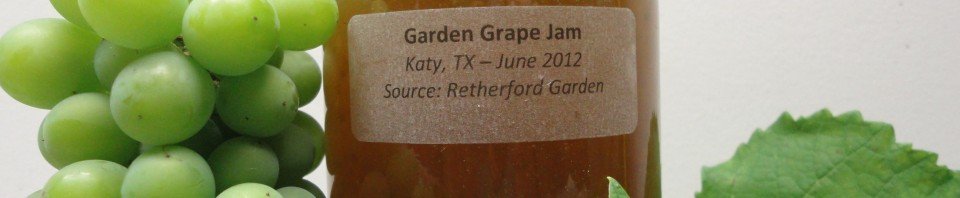
Of all the jams, preserves and marmalade that I attempt in the kitchen, the one that provides me with the most personal sense of accomplishment is the Garden Grape Jam. The reason is very simple, whereas all of the other fruits are source from east Texas, the grapes used in making this jam come entirely from my backyard.
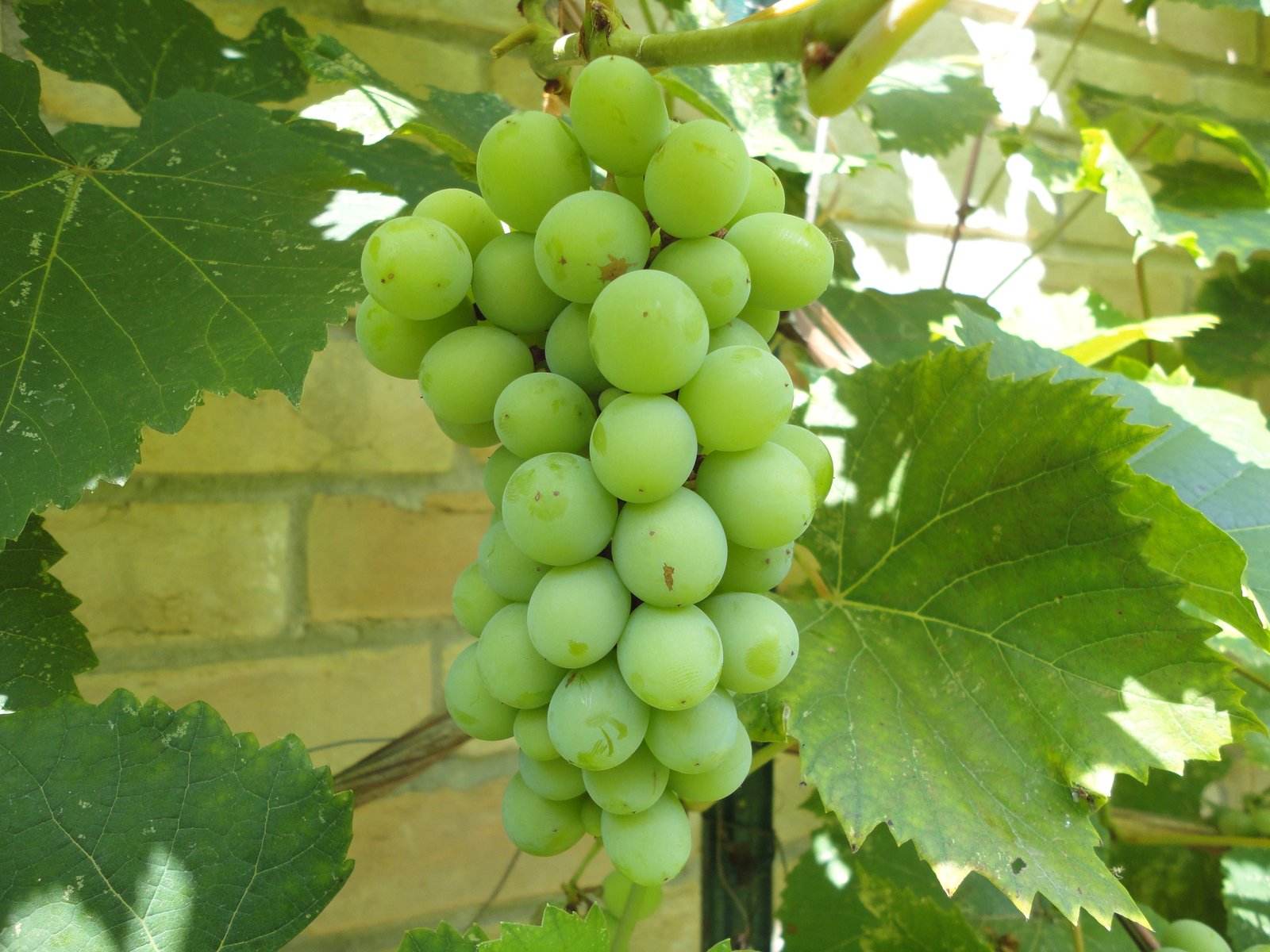
Ripe White Grapes On The Vine Growing in the Yard
Cultivating grapes in Houston is not difficult, but the fruit produced is not of superior quality. This limits the uses for the grapes that I grow in my yard. The vine has been producing grapes in decent quantities for the past four years. The first year we were disappointed in the tartness of the ripe grapes. The second year we attempted to make vinegar. I am not sure what happened to the “vinegar”. Apparently the attempt failed and the results were discarded. Last year on a hope and a prayer, I attempted to make grape jam. I will admit, I was surprised at the results. This year, the results were just as successful.
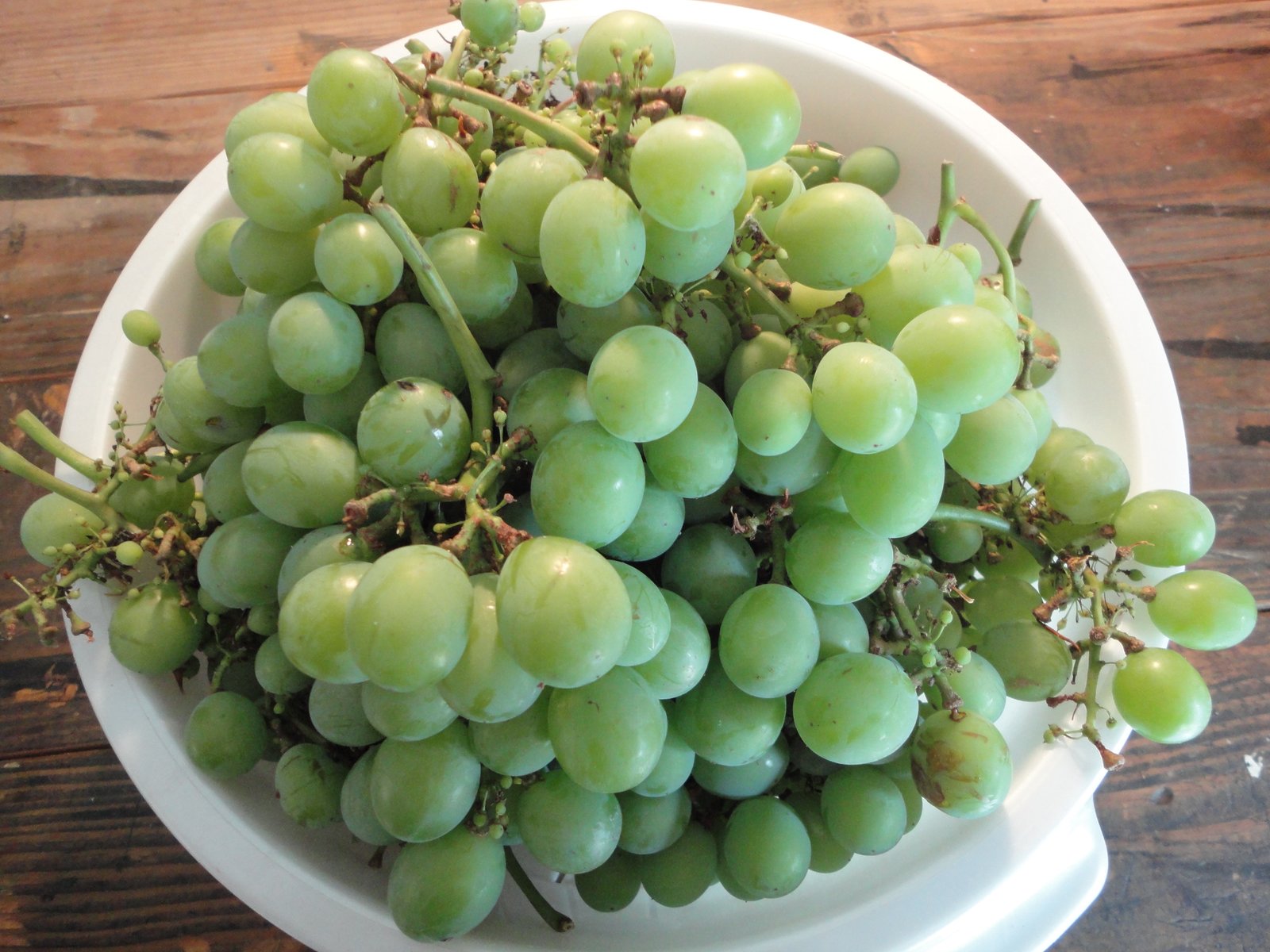
Picked Home Grown Bunches of White Grapes
Making grape jam is straight forward and although there is an additional step or two, the total time required is about the same as any other fruit jam that requires preparation of the fruit prior to processing (cooking) the fruit.
Instructions to prepare the grapes to make jam:
Remove the bunches of grapes from the vine. The grapes do not need to be completely ripe. In my situation, I pick them a day or two from being ripe because the birds in my backyard know when the grapes are ripe before me.
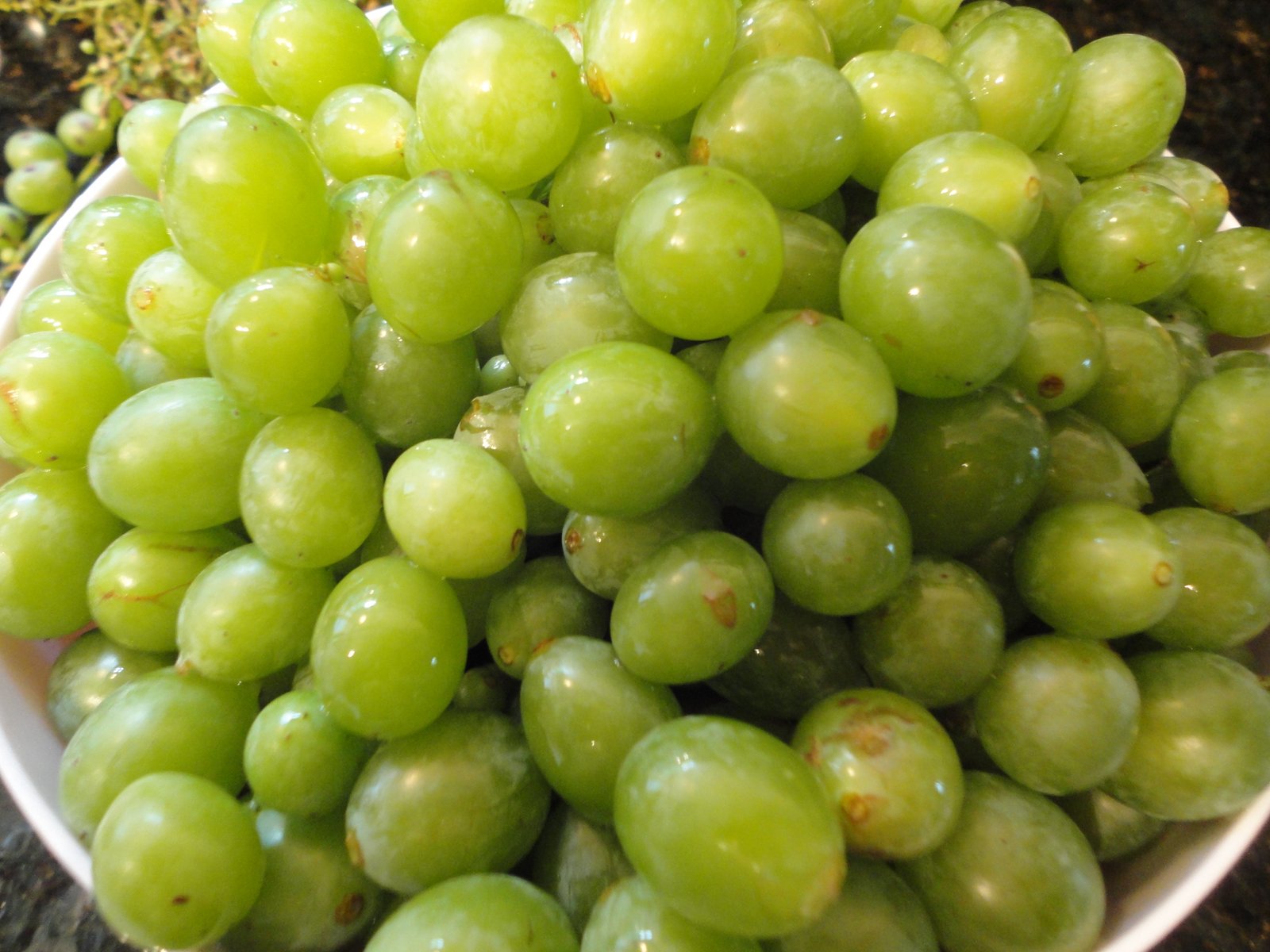
Picked, Cleaned and Washed Home Grown Grapes
Remove any grapes that appear rotted damaged or infested. Then thoroughly wash and remove all grapes from the stems. Do not discard grapes that are underdeveloped or small. All of the grapes contribute to the jam.
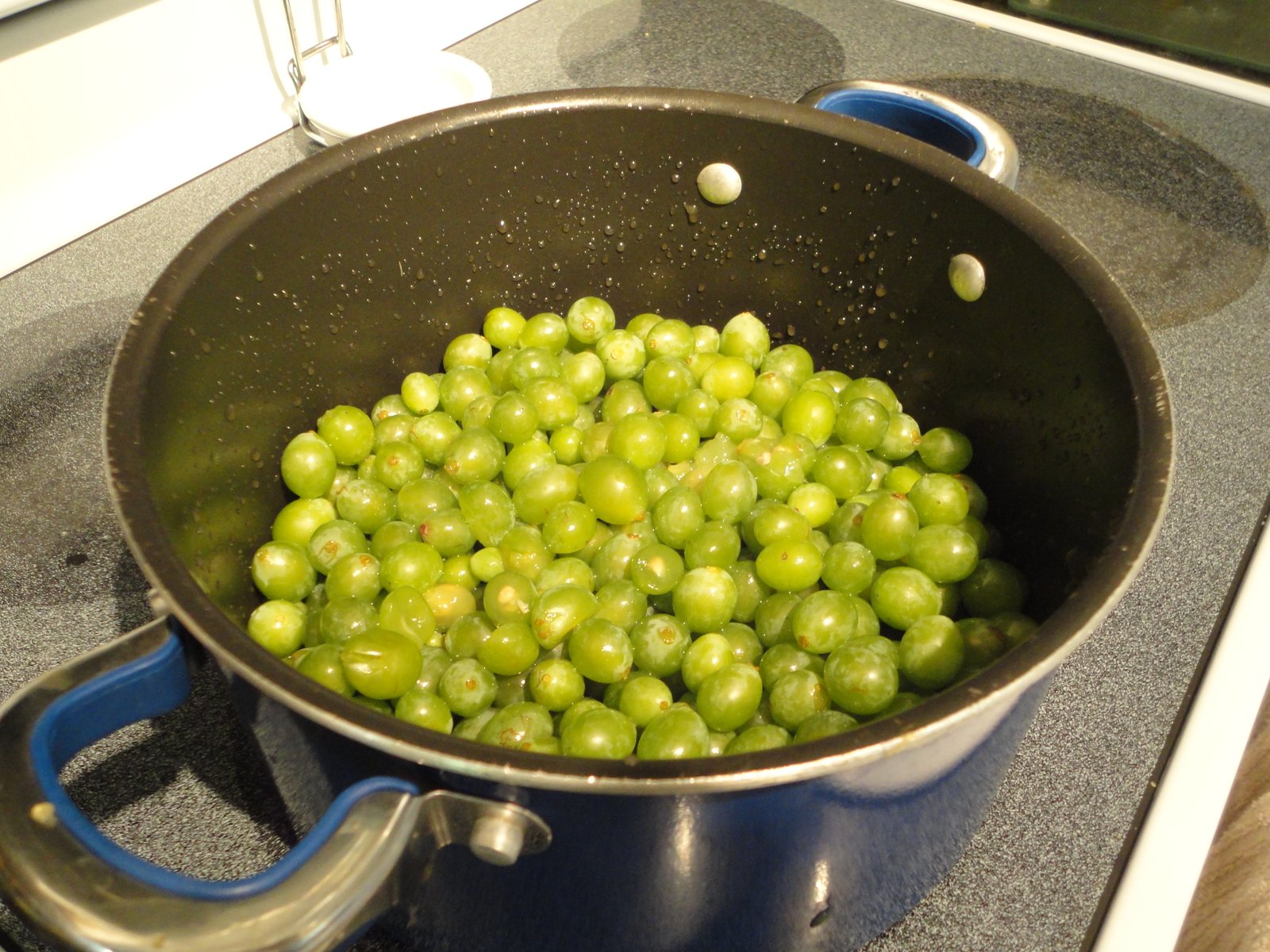
Grapes in a Pot Ready to be Boiled to Make Jam
Dump the grapes into a large pot, add ½ cup of water, cover and then turn on the stove to medium high. Allow the grapes to come to a boil. Boil the grapes, occasionally stirring until all of grapes have burst.
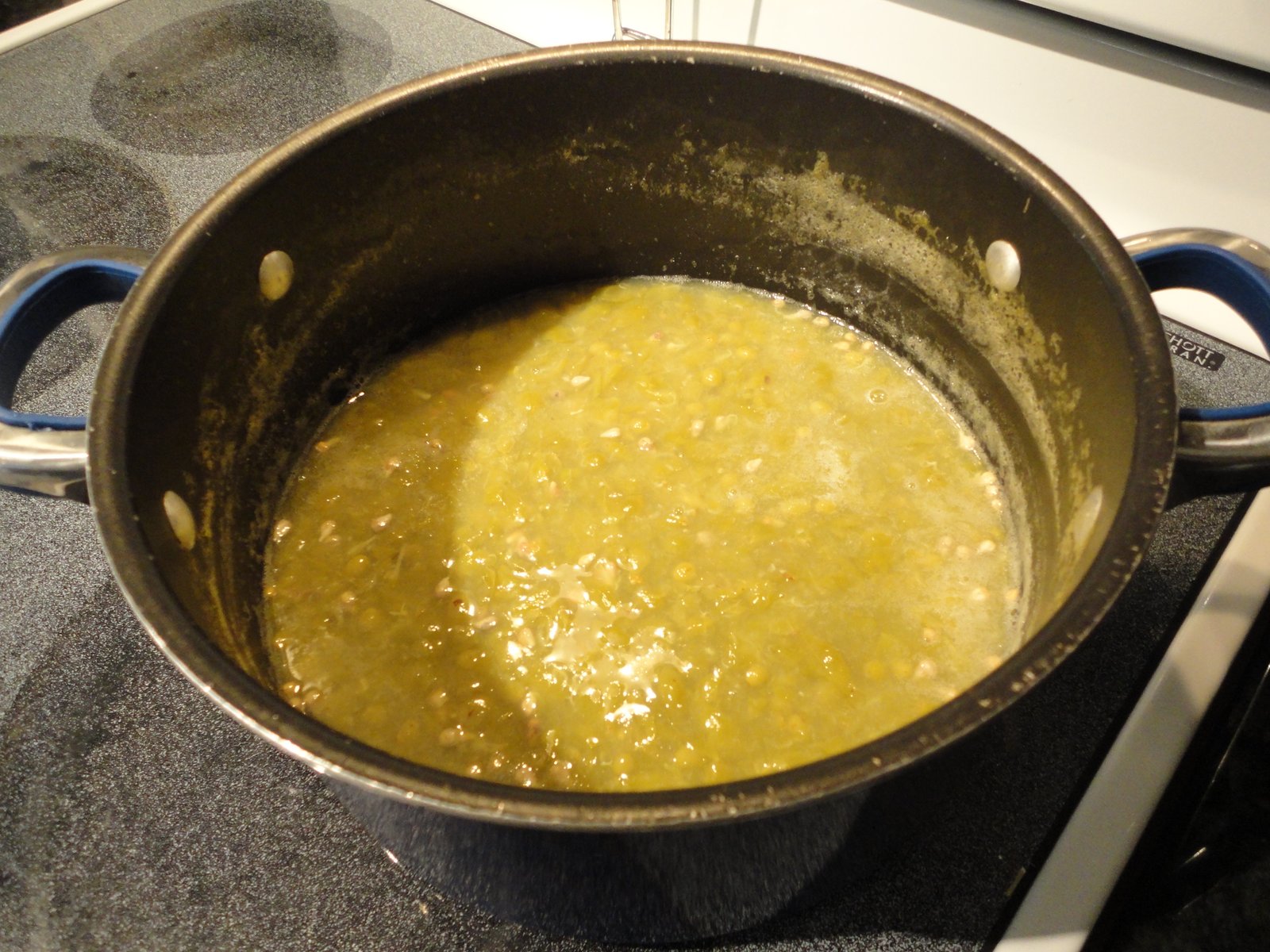
Grapes Boiled (Juice, Pulp, Skin and Seeds)
Remove from the stove and allow the mixture to cool.
If you grow a variety of grapes that are seedless, then skip the next two steps. If not, then the next two steps are critical.
Place a wire sieve on top of a bowl and pour the boiled grapes through the sieve to separate the juice from the seeds, skin and pulp. Once you have separated the juice, then with a wooden spoon mash the remaining mixture against the sides of the sieve to separate the pulp and skin from the seeds. The purpose of this step is three fold; 1) Increases the overall volume of the fruit to be processed. 2) Adds additional flavor and texture to the jam. 3) The pulp and skin added to the grape juice adds additional pectin which will help solidify the jam.
You will not separate all of the pulp and skin from the seeds, so I take the remaining mash and in a small pot boil this mixture with a cup of water to extract more flavor and pectin. When the water has been reduced by half, I repeat the prior step.
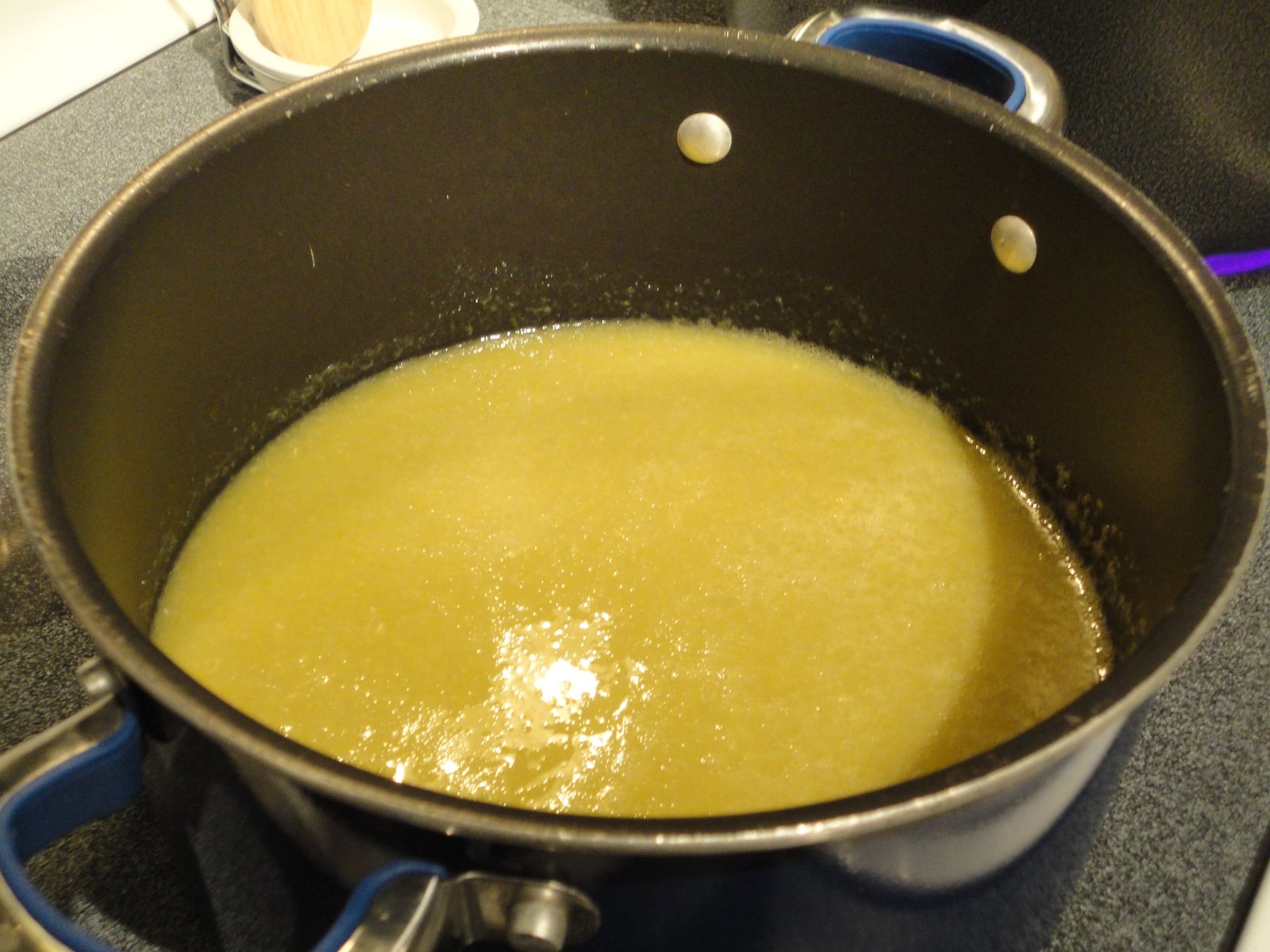
Strained Grapes (Juice, Pulp and Some Skin)
Pour the strained contents into a large measuring cup and record the total number of cups of grape juice, pulp and strained macerated skin. The total volume collected is important, for you want to use all of the juice collected and will need to calculate the additional fractions of sugar and pectin required. If you are uncomfortable with using fractional amounts of Sugar and Pectin, then I suggest purchasing a bottle of filtered, natural grape juice and add enough juice to your own grape juice until you have an equivalent amount for an additional batch.

Boiled Grape Jam (Sugar and Pectin Added), Waiting to be Poured into Mason Jars
To make grape jam I follow the instructions on the box of pectin for Grape (Concord) Cooked Jelly; 5 Cups of Prepared Juice, 7 Cups of Sugar and 1 Box of Pectin. Follow the instructions provided by either Sure-Jell or Ball on their boxes of Pectin and you will have no difficulty or problems making perfectly set Garden Grape Jam. In addition to the instructions included in the boxes of Pectin, the following link to a PDF provided by Ball is a great resource.
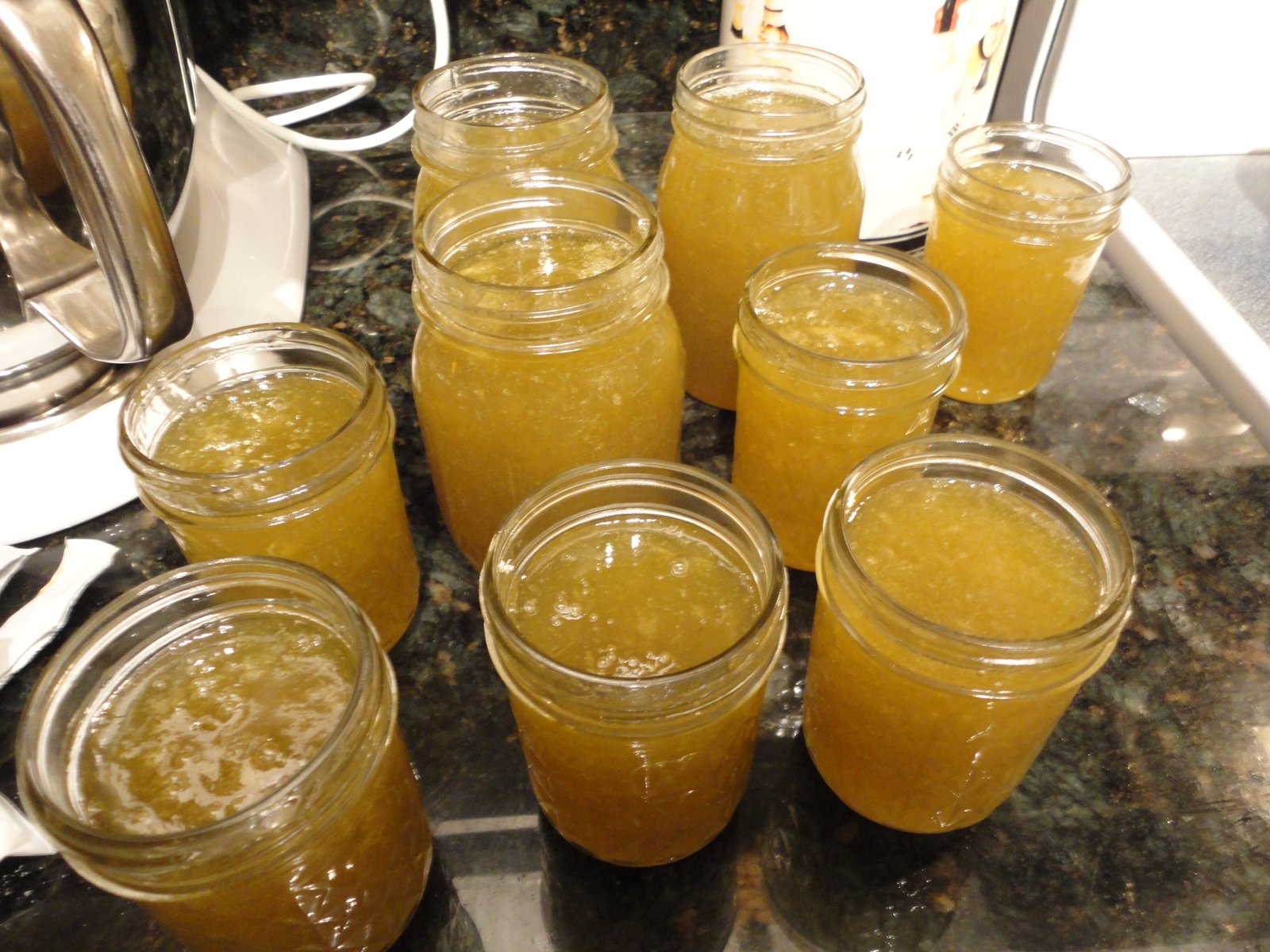
Garden Grape Jam Poured into Mason Jars
Garden Grape Jam is packed with the intense flavor of home grown grapes. The tartness of the grapes combined with the sugar is a nice balance and alternative to the sometimes too sweet flavor of commercially processed jams, jellies and preserves.
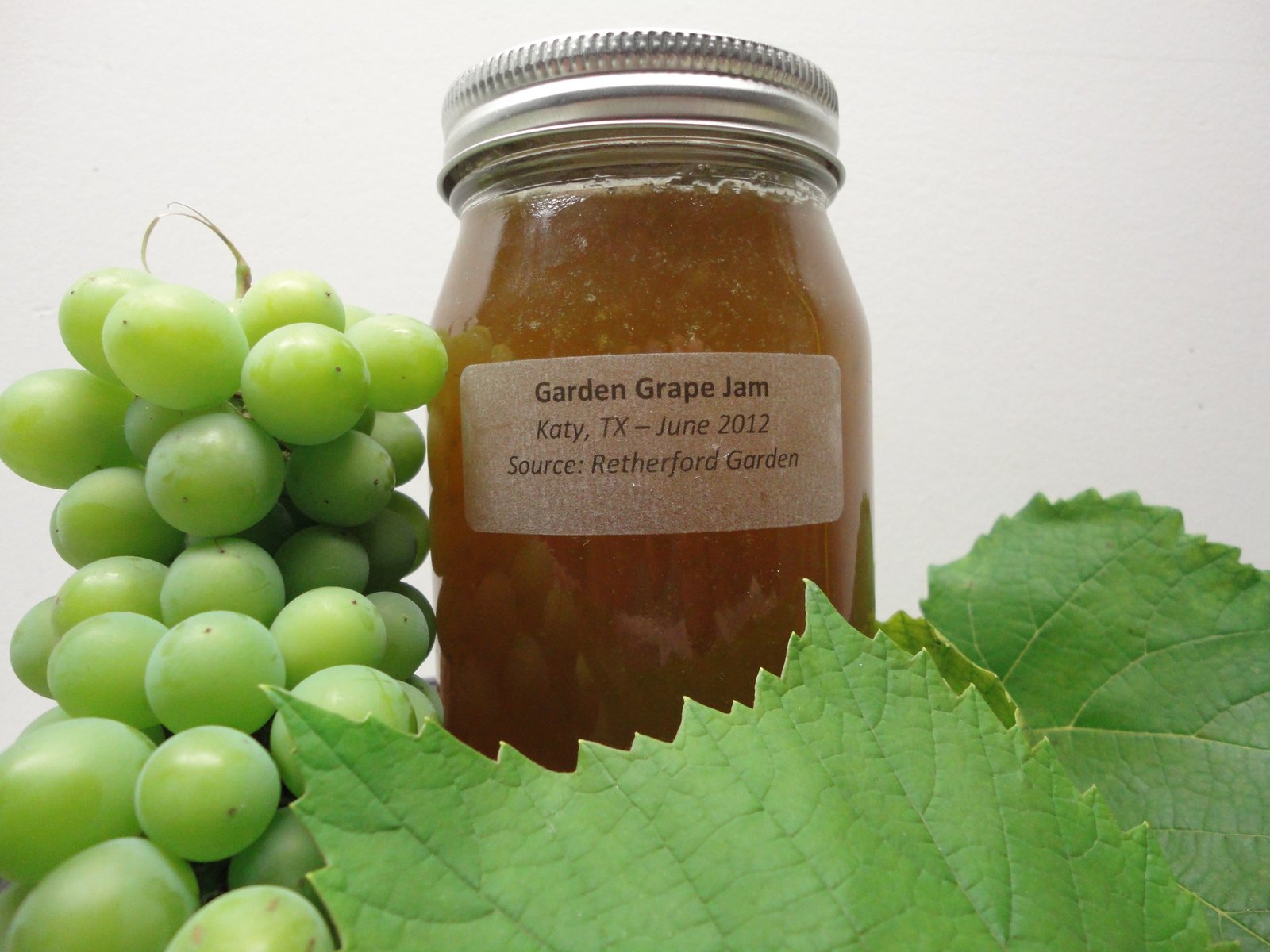
Garden Grape Jam in Mason Jar
Not only is Garden Grape Jam good with peanut butter on a sandwich or spread on toast with butter, but is an excellent pairing with crackers sharp cheddar cheese, blue cheese or goat cheese.
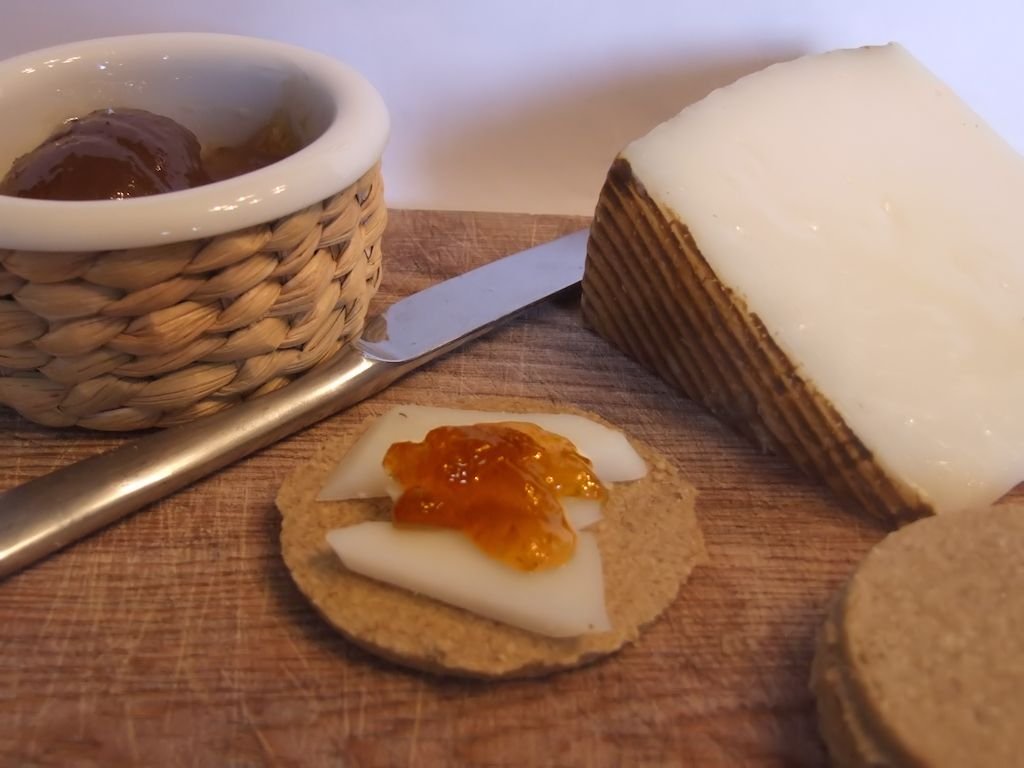
Homemade Garden Grape Jam with Manchego Cheese and Oatcakes

13 comments
Skip to comment form
As a child, I loved grape jelly. I’ll have to give this (more sophisticated) version a try.
Can’t wait to try recipe,my granny used to make jam from scuffanon white grapes , the only grape jam i like lol 🙂
Made this with half white seedless grapes and half seeded black grapes (wild). I processed the skins and pulp left over from the white grapes and added it back to the mixture. The mix was so sweet I didn’t add sugar, used the pectin for no- or reduced- sugar. Turned out delicious!
Ready to make another small batch with the last of the grapes.
Bill, while I’m responding from my new home in Germany (since 2012), we moved here from Katy, TX! (Highland Knolls & Fry) Making your jam out of necessity, actually. We live in a home above our landlord, who is quite the gardener. He’s asked that we harvest the grapes which cover our balcony. A hot, dry summer has produced great fruit this year, but are 50% skin and seeds. Your recipe is PERFECT for these grapes! Thanks.
Having never grown grapes before, I planted 5 flame and 1 canadice Home Depot small grape vines (quart pots) in Western Arizona 3 years ago. My 6 grape vines cover 50 foot supported by steel stakes in concrete and plastic covered stainless steel wire 3/16 inch thick. Supposedly they don’t suppose to produce any grapes for 3-4 years but the 2nd year we had about 3-4 hundred pounds of small grapes. This year I thinned them heavily, removing about 3/4 of all grape clusters. In addition, I didn’t use the bird netting which made it difficult to pick the grapes, but kept trapping quail behind the netting, but used paper lunch bags tied loosely around each green cluster of grapes. Was I surprised! Bagged about 75 large clusters, left a few for the birds and now when I cut a bag off the vine they are completely filled with beautiful DEEP RED grapes, though a few are still green, but very SWEET! From what I learned from the grape harvesting in Chile, where many vineyards bag their grapes, is that grapes don’t need direct SUN to ripen! Give it a try, you will be pleasantly surprised when you open each bag of PERFECT grapes, unmolested by the quail, other birds, or any insects to include ants!
Any idea how many pounds of grapes yield the 5 cups of pulpy juice? I have grapes frozen from the summer and want to transform them today while snowed in.
I went ahead and experimented. It took about 3.5# of grapes to get 5 cups of puree (I cooked down then put through the vitamix/blender as I didn’t care for the look/texture). Not the prettiest colored jam but it tastes good. Now to see if I did it right and it sets up. Either way, we’ll enjoy it. Thanks for helping me creatively use my freezer stock!
If you put your label on the lid (which is disposed of after one use) rather than on the jar (which you save and reuse), it saves you from having to remove the label from the jar before the next use.
Is this jam ok to freeze instead of proper canning?
I suppose you could freeze jam instead of canning. I would however still make sure that your equipment is sterile before freezing.
Our grapevines have never produced as many grapes-making jelly for the first time. This green grape recipe was easy and the jelly is yummy. Sharing with friends and family makes the process even more rewarding. Thank you!
I am about to try this before the birds ? beat us to it. Kurrawong,s in Australia. Will keep you posted.
I prepared this recipe but I used low/no-sugar pectin and followed the box directions for substituting sugar with splenda. The grapes are pretty tart to start with. The jury is still out on whether it will set (I think not).
I would be interested to know if anyone has successfully made this recipe with Splenda or Truvia. My husband is diabetic and so I don’t want to add sugar.